Paracyathus brevis
Paracyathus brevis
Representative Specimens
Selected reference specimens illustrating this species from different geological units and fossil sites.
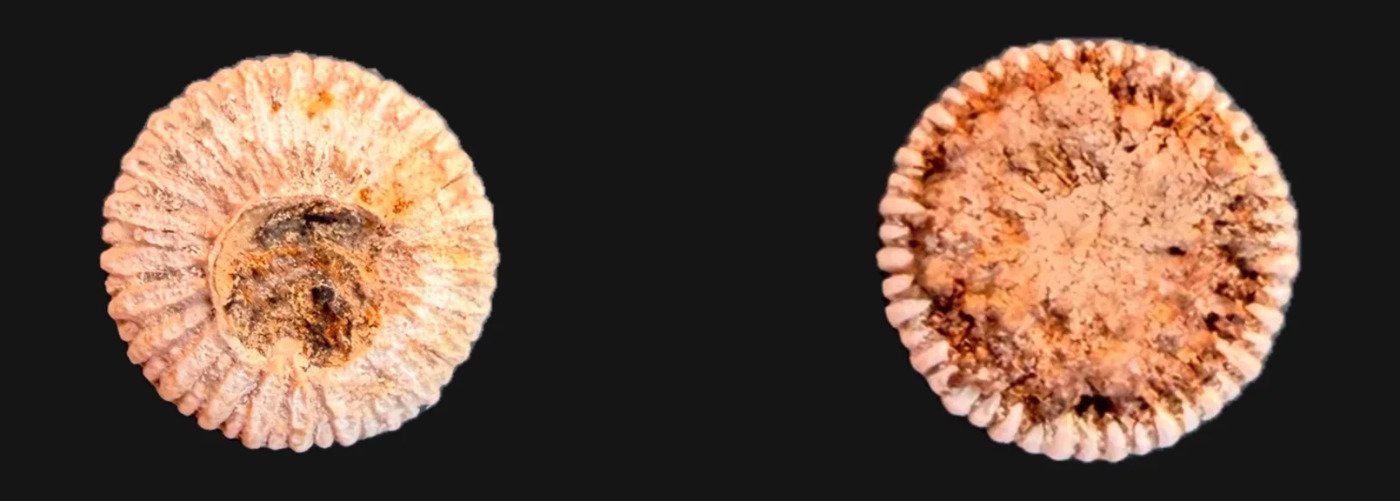
Identification Examples
Choose a fossil site to view photographed reference specimens.
Summary
Paracyathus brevis was a solitary scleractinian coral: one coral polyp occupied a single cup-shaped calcareous skeleton rather than building a large reef colony. The polyp bore tentacles around the mouth and captured small plankton and suspended organic matter from seawater.
London Clay conditions were muddy and not those of a clear-water reef. By analogy with many living caryophylliid solitary corals, a non-reef, probably azooxanthellate mode of life is a reasonable inference. Fossils preserve the corallum, especially the radial internal septa that supported and partitioned the living polyp.
Quick Identification
Look for: a small solitary coral cup or conical corallum with numerous thin radial septa converging toward the centre; examine the base, wall and septal arrangement rather than relying on size alone.
Diagnostic Features
- Corallum solitary, not part of a colonial reef framework.
- Calice contains multiple cycles of radial septa.
- External wall is compact and may preserve fine costae aligned with internal septa.
- Overall corallum is short and compact relative to more elongate solitary corals.
- Species-level separation from Paracyathus caryophyllus requires well-preserved corallum proportions and septal architecture.
Fossil Details
Similar Species
Recorded Fossil Sites
London Clay Formation
References
- Milne-Edwards, H.; Haime, J. (1850). Corals of the London Clay. A Monograph of the British Fossil Corals, 12–43 View reference