Isistius trituratus
Isistius trituratus
Representative Specimens
Selected reference specimens illustrating this species from different geological units and fossil sites.
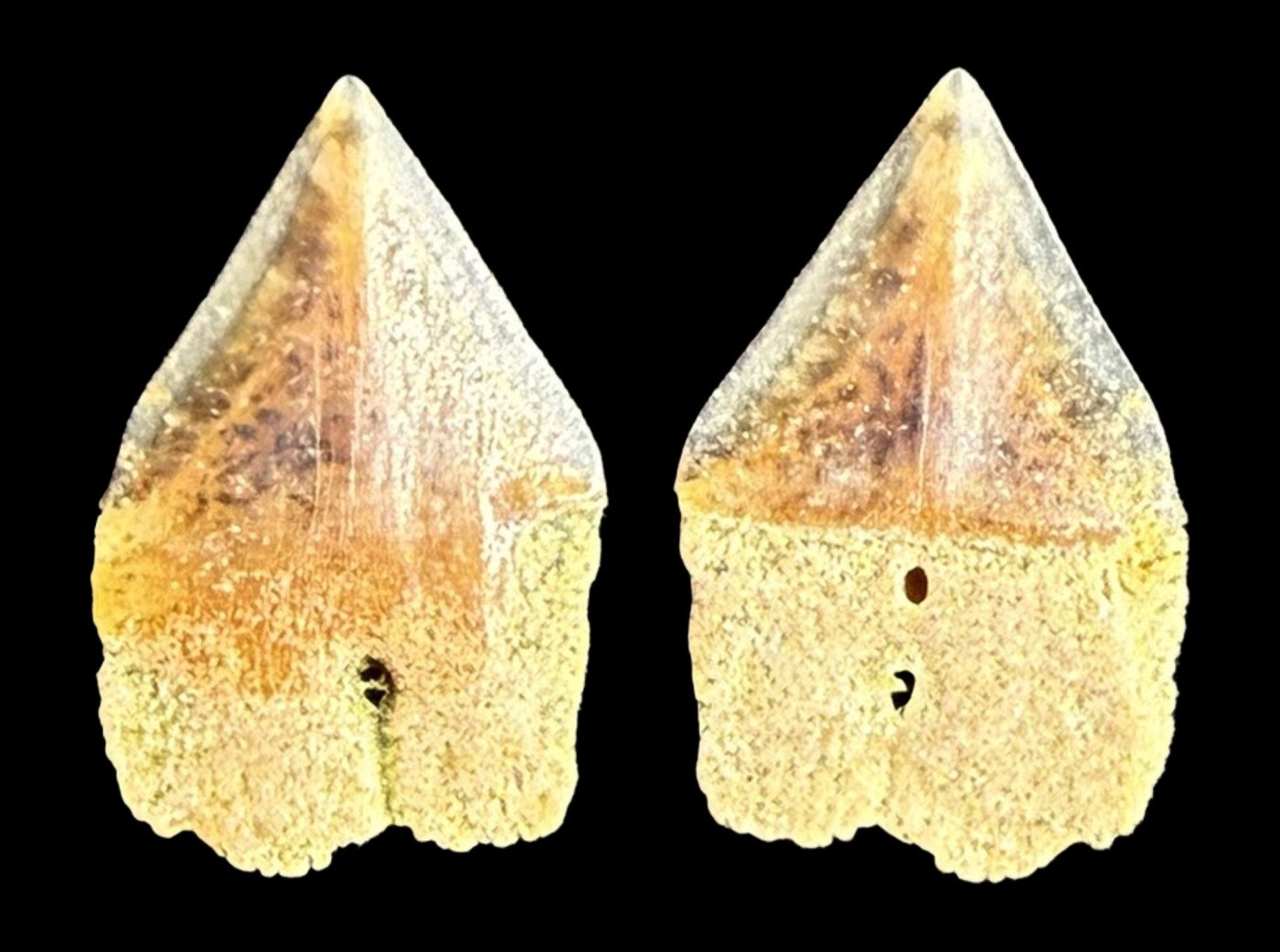
Identification Examples
Choose a fossil site to view photographed reference specimens.
Summary
Isistius trituratus was an extinct relative of modern cookiecutter sharks and possessed one of the most specialised shark dentitions in the London Clay fauna. Its lower teeth formed a close-set cutting blade rather than a series of separate grasping points.
Living cookiecutter sharks use a similar dental arrangement to remove plugs of tissue from much larger animals. The comparable lower dentition of I. trituratus suggests that some form of specialised cutting or ectoparasitic feeding may already have evolved in the lineage, although this behaviour cannot be demonstrated directly from fossil teeth.
The species was a small shark compared with the major lamniform predators around it, but its unusual feeding apparatus would have allowed it to exploit a very different ecological niche. Its fossils therefore provide an early record of extreme feeding specialisation among squaliform sharks.
Quick Identification
Look for: a tiny, flat tooth shaped almost like a miniature triangular blade. It has smooth cutting edges, no separate little points on either side, and a broad deep root directly beneath the crown.
Diagnostic Features
- Lower crown is strongly flattened from front to back and broadly triangular.
- Cutting edges are smooth and unserrated, producing a simple blade.
- No lateral cusplets are present beside the main point.
- Root is broad, deep and flattened rather than divided into long root lobes.
- Adjacent lower teeth fitted closely together to form a continuous functional cutting row rather than acting as isolated grasping teeth.
Fossil Details
Recorded Fossil Sites
London Clay Formation
References
- Rayner, D.; Mitchell, T.; Rayner, M. (2009). London Clay Fossils of Kent and Essex. 228 pp.. Medway Fossil and Mineral Society, Rochester, Kent View reference
- Ward, D.J. (1980). The distribution of sharks, rays and chimaeroids in the English Palaeogene. Tertiary Research, 3(1), 13–19 View reference