Londinimola williamsi
Londinimola williamsi
Representative Specimens
Selected reference specimens illustrating this species from different geological units and fossil sites.
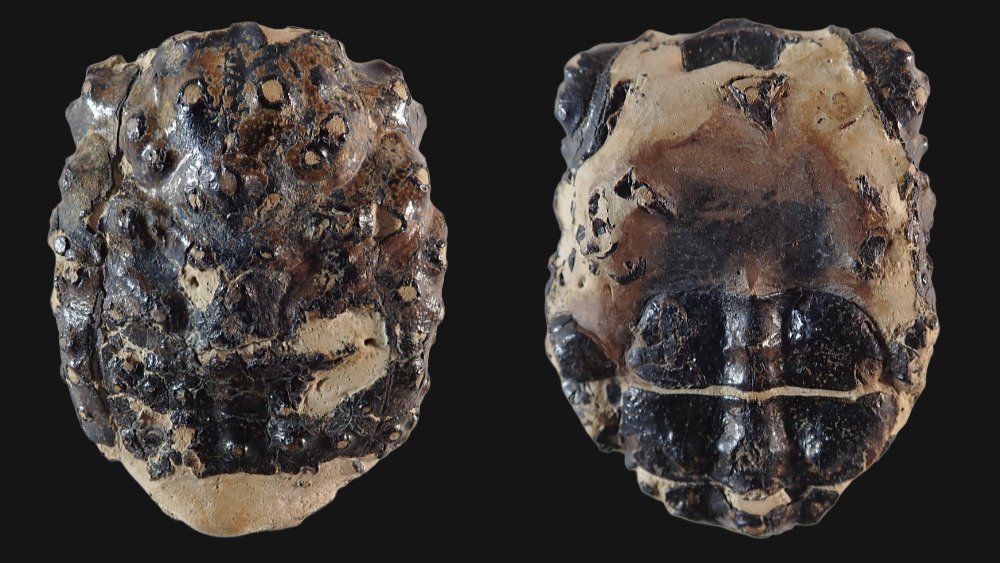
Identification Examples
Choose a fossil site to view photographed reference specimens.
Summary
Londinimola williamsi was a homolid or carrier crab. Living homolids often use their specially positioned rear legs to hold sponges, shells or other objects above the body, providing camouflage and sometimes protection while they move across the seabed.
If Londinimola behaved similarly, it would have been one of the more remarkable inhabitants of the London Clay sea: a crab effectively carrying part of its environment around with it. It was probably an opportunistic predator and scavenger beneath that portable cover.
Quick Identification
Look for: an elongated homolid-style carapace with a narrow, lengthened outline and clearly defined dorsal regions; compare complete frontal and lateral features with the type material of Londinimola williamsi.
Diagnostic Features
- Carapace distinctly elongate relative to many London Clay brachyurans.
- Dorsal regions and grooves are clearly organised along the lengthened carapace.
- Frontal construction is consistent with a homolid carrier crab.
- Lateral margins are comparatively long rather than forming a short rounded crab outline.
- Species-level identification requires most of the carapace outline and cannot be based on an isolated chela.
Fossil Details
Similar Species
Recorded Fossil Sites
London Clay Formation
References
- Collins, J.S.H.; Saward, J. (2006). Three new genera and species of crabs from the Lower Eocene London Clay of Essex, England. Bulletin of the Mizunami Fossil Museum, 33, 67–76 View reference
- J. S. H. Collins; C. J. T. Mellish; A. J. Ross; P. R. Crabb; S. K. Donovan. (2020). A guide to the fossil Decapoda (Crustacea: Axiidea, Anomura, Brachyura) of the British Isles. Proceedings of the Geologists' Association, 131(1), 19–50 View reference