Hoploparia gammaroides
Hoploparia gammaroides
Representative Specimens
Selected reference specimens illustrating this species from different geological units and fossil sites.
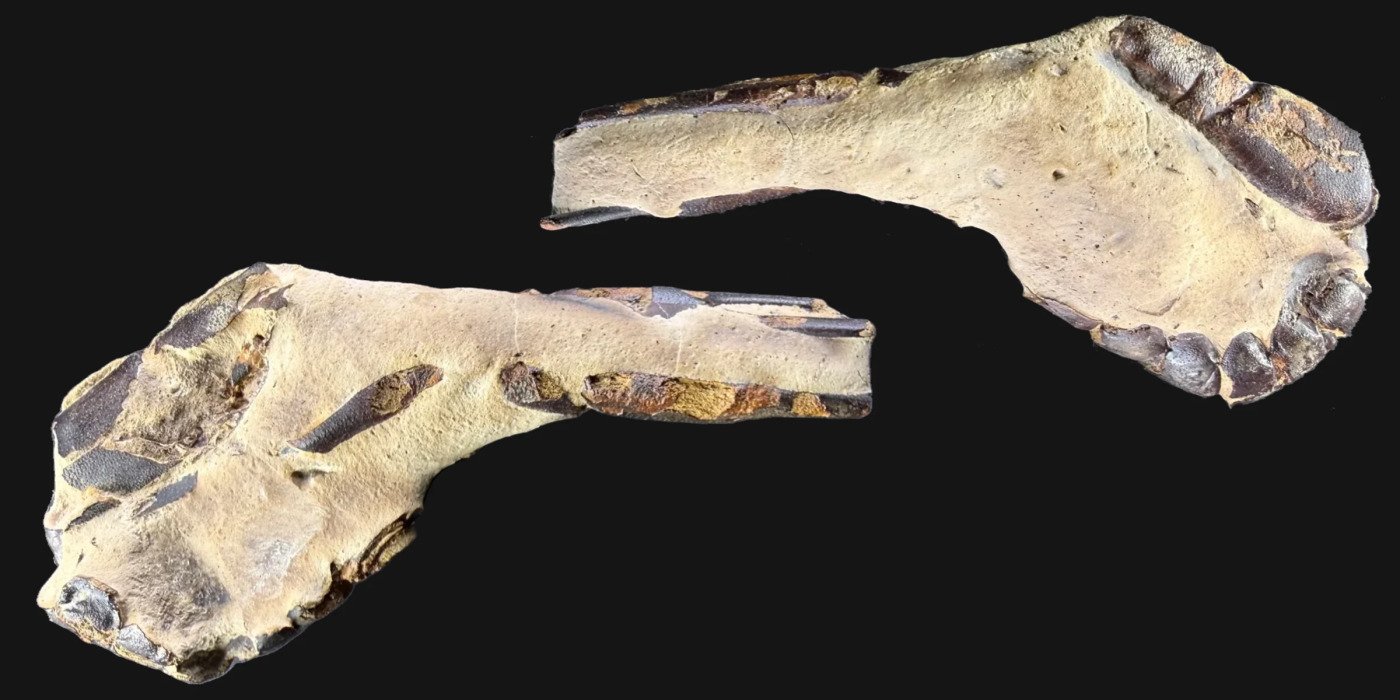
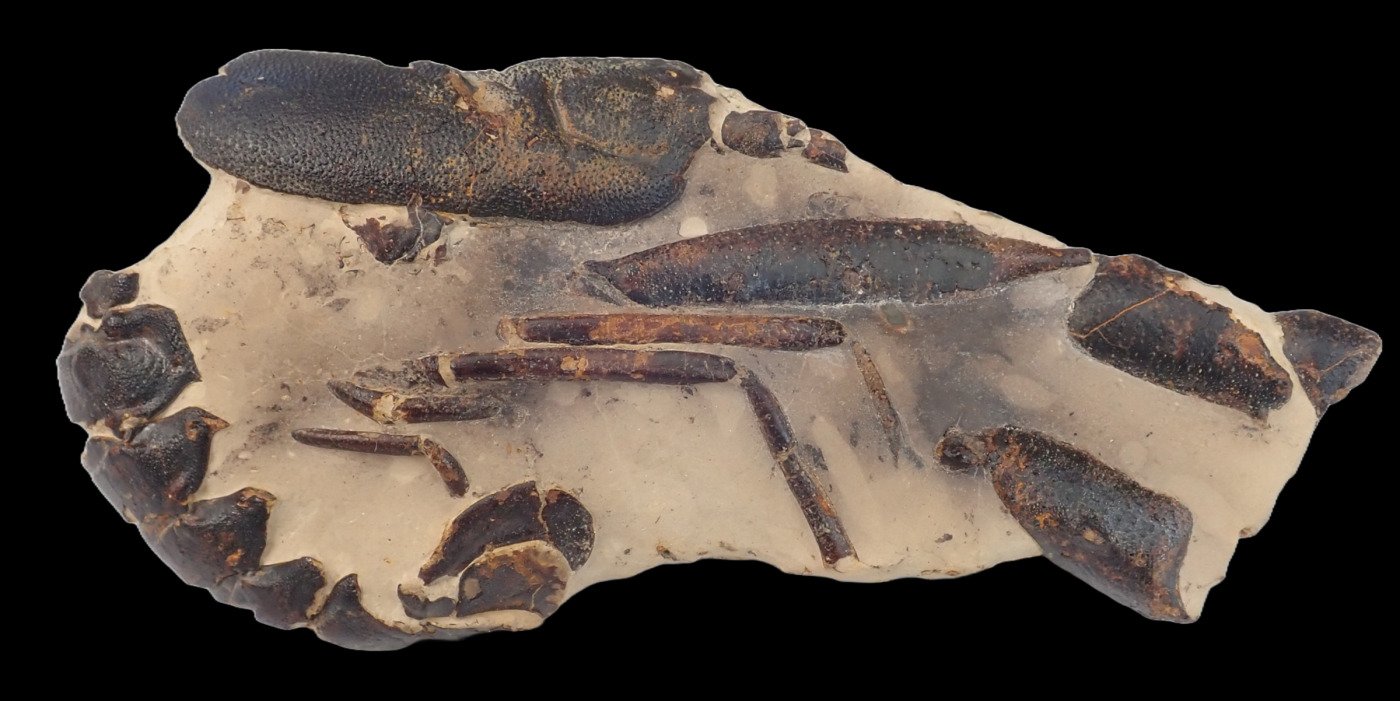
Identification Examples
Choose a fossil site to view photographed reference specimens.
Summary
Hoploparia gammaroides was a large clawed lobster and one of the characteristic crustaceans of the London Clay. It would have spent much of its life walking over the seabed or sheltering in protected places, using its claws to seize small animals, tear food and scavenge carcasses.
Like living lobsters, it was probably most active close to the bottom and may have relied on its antennae and chemical senses to find food in murky water. Its abundance in London Clay collections makes it an excellent animal for imagining the busy crustacean life moving across the Eocene sea floor.
Quick Identification
Look for: an elongate Hoploparia carapace with the characteristic cervical and branchial groove pattern, ideally associated with robust chelae; compare the whole morphology with Hoploparia wardi rather than using claw size as a rule.
Diagnostic Features
- Carapace elongate and nephropid in overall form.
- Cervical and branchial grooves are clearly developed on well-preserved carapaces.
- First walking legs form robust chelae typical of a clawed lobster.
- Carapace proportions and groove arrangement separate it from Hoploparia wardi when adequately preserved.
- No single size threshold is diagnostic; Species-level identification requires the combined morphology.
Fossil Details
Similar Species
Recorded Fossil Sites
London Clay Formation
Walton Member
Synonyms & Previous Names
References
- J. S. H. Collins; C. J. T. Mellish; A. J. Ross; P. R. Crabb; S. K. Donovan. (2020). A guide to the fossil Decapoda (Crustacea: Axiidea, Anomura, Brachyura) of the British Isles. Proceedings of the Geologists' Association, 131(1), 19–50 View reference
- W. J. Quayle. (1987). English Eocene Crustacea (lobsters and stomatopod). Palaeontology, 30(3), 581–612 View reference