Oxyaena gulo
Oxyaena gulo
Representative Specimens
Selected reference specimens illustrating this species from different geological units and fossil sites.
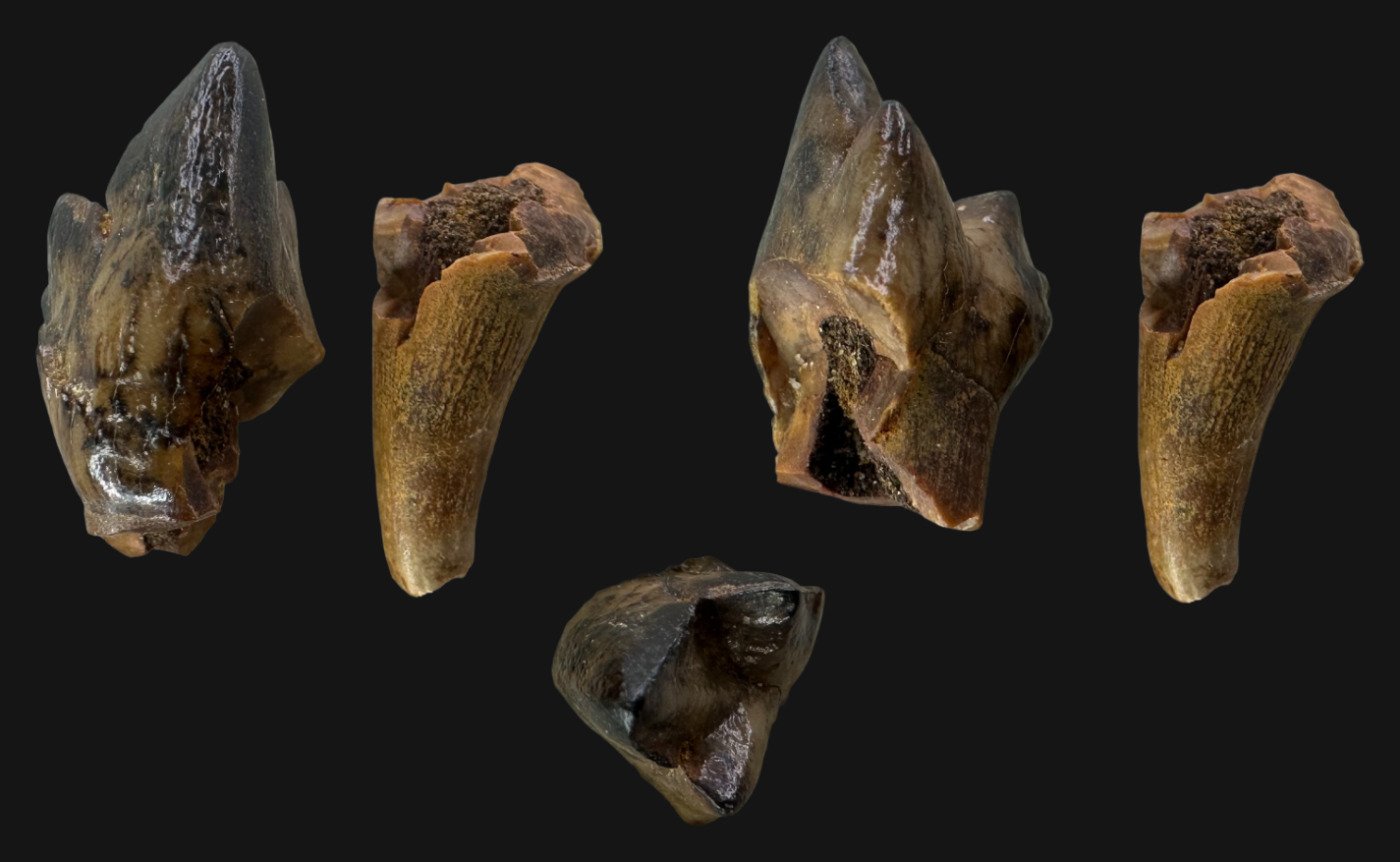
Identification Examples
Choose a fossil site to view photographed reference specimens.
Summary
Oxyaena gulo was an early Eocene predatory mammal belonging to the extinct oxyaenids, a carnivorous lineage that evolved before modern cats, dogs and other carnivorans. Powerful jaws and strongly developed cutting teeth indicate a meat-rich diet, probably including small to medium-sized vertebrate prey and carrion.
The Abbey Wood record is represented by very limited dental material, so details of the British animal’s body form and behaviour must be inferred from better-known oxyaenids. Even so, its presence adds a specialised mammalian predator to the diverse terrestrial fauna represented in the Lessness Shell Bed.
Quick Identification
Look for: a robust mammal molar with tall cusps and unusually long, sharp cutting crests. The tooth is strongly adapted for shearing rather than grinding. Isolated Abbey Wood teeth should not normally be identified to O. gulo without detailed comparison.
Diagnostic Features
- Robust molars with strong, blade-like cutting crests rather than broad crushing surfaces.
- Upper first molar has a particularly long rear cutting crest.
- Lower molars have an elongated arrangement of the main cusps, longer than it is wide.
- The front cusp of the lower molar projects forwards, extending the cutting edge.
- The inner cusp of the lower molar is reduced compared with the dominant outer cusp.
Fossil Details
Recorded Fossil Sites
Lessness Shell Bed
References
- Hooker, J. J. (2010). The mammal fauna of the Early Eocene Blackheath Formation of Abbey Wood, London. Monograph of the Palaeontographical Society, 164(634), 1–162. Palaeontographical Society, London View reference