
Albula eppsi
Albula eppsi
View age-specific evidence and explanation
| Age | Recorded Occurrences | Localities | Rarity |
|---|---|---|---|
| Thanetian | 1 | 1 | Not yet established |
| Ypresian | 1 | 1 | Not yet established |
These counts describe published LBPS Occurrence records with directly assigned, unambiguous geological-unit mappings—not specimen abundance. Records at restricted Localities and ambiguous or unsupported ages are excluded. Species-level age labels are not used as proof of an age-specific Occurrence.
Specimen-based rarity requires comparable, correctly identified physical fossils, geological provenance and publication permissions. It does not estimate your chance of finding a fossil or collecting access.
Representative Specimens
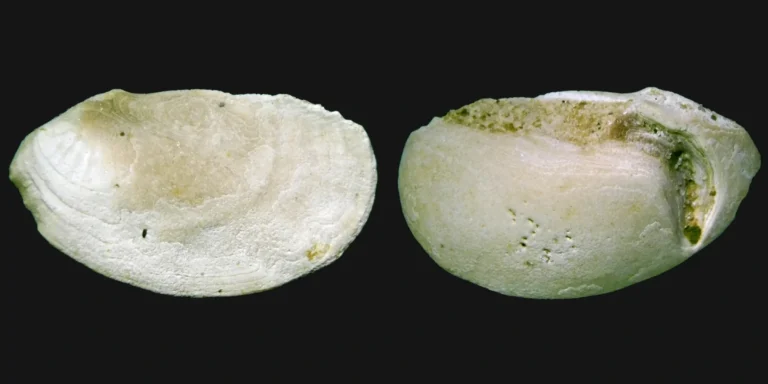
Selected reference specimens illustrating this species from different geological units and fossil sites.
Quick Identification
Look for: small low-crowned crushing teeth with a circular occlusal outline, a nearly flat to gently convex top, thin smooth enameloid and a flat base with a centrally placed circular pulp cavity. Teeth with straight, nearly parallel or biconvex sides are a better fit than the larger, taper-sided teeth referred to Albula oweni; heavily worn isolated teeth remain difficult.
Identification Examples
Choose a fossil site to view photographed reference specimens.
Summary
Albula eppsi was a Palaeogene bonefish relative known from late Palaeocene and Eocene marine deposits. Comparison with living bonefishes suggests an active coastal fish that foraged over shallow seafloors, although this ecology is inferred rather than directly demonstrated. Its robust crushing dentition is consistent with feeding on hard or resistant benthic prey.
The species is known chiefly from small crushing teeth and tooth-bearing dental elements. These durable parts preserve its feeding apparatus far more readily than the rest of the skeleton, so they provide most of what is currently known about the animal.
Diagnostic Features
- Crown is very low and circular to near-circular in occlusal outline.
- Unworn occlusal surface is nearly flat to weakly convex.
- Enameloid is thin and smooth and may not extend fully to the crown base.
- Lateral sides are straight or near-parallel to biconvex rather than strongly tapering.
- Basal surface is flat with a centrally placed circular pulp cavity.
Fossil Details
Similar Species
Recorded Fossil Sites
Lessness Shell Bed
Reculver Sand Member
References
- Ebersole, J.A.; Cicimurri, D.J.; Stringer, G.L. (2019). Taxonomy and biostratigraphy of the elasmobranchs and bony fishes (Chondrichthyes and Osteichthyes) of the lower-to-middle Eocene (Ypresian to Bartonian) Claiborne Group in Alabama, USA, including an analysis of otoliths. European Journal of Taxonomy, 585, 1–274 View reference
- Ward, D.J. (1978). The Lower London Tertiary (Palaeocene) succession of Herne Bay, Kent. Report of the Institute of Geological Sciences. Institute of Geological Sciences View reference
- White, E.I. (1931). The vertebrate faunas of the English Eocene. I. From the Thanet Sands to the Basement Bed of the London Clay. 121 pp.. British Museum (Natural History), London View reference