Alopias crochardi
Alopias crochardi
Representative Specimens
Selected reference specimens illustrating this species from different geological units and fossil sites.
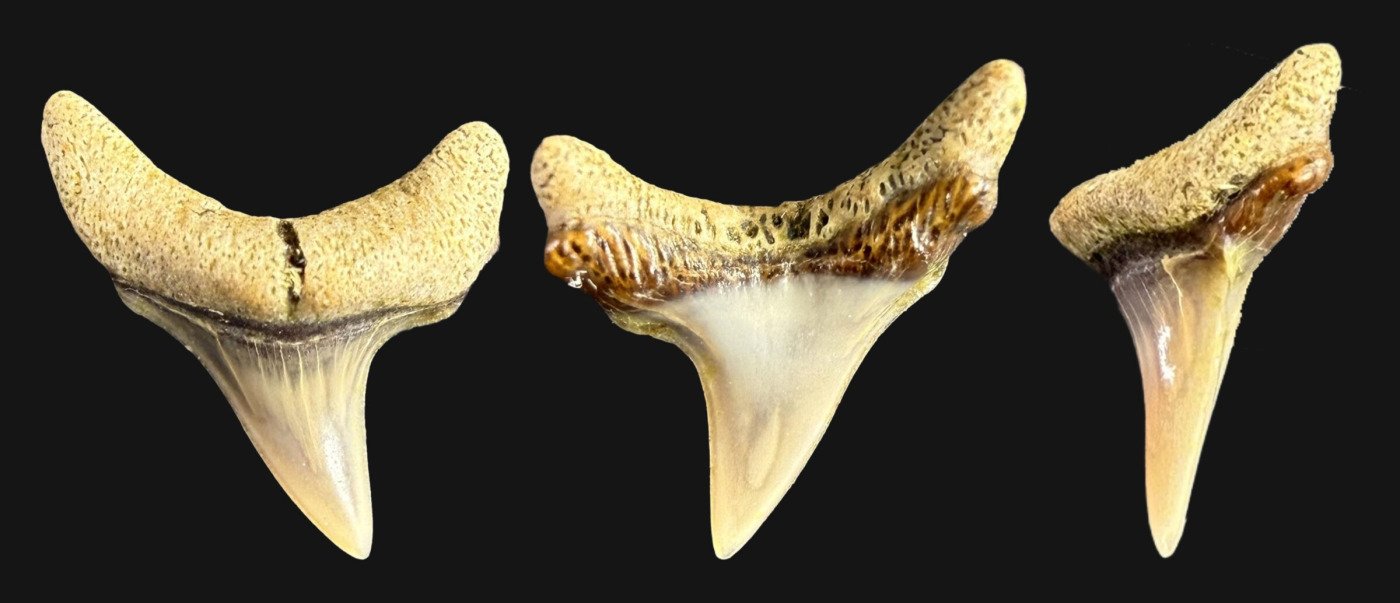
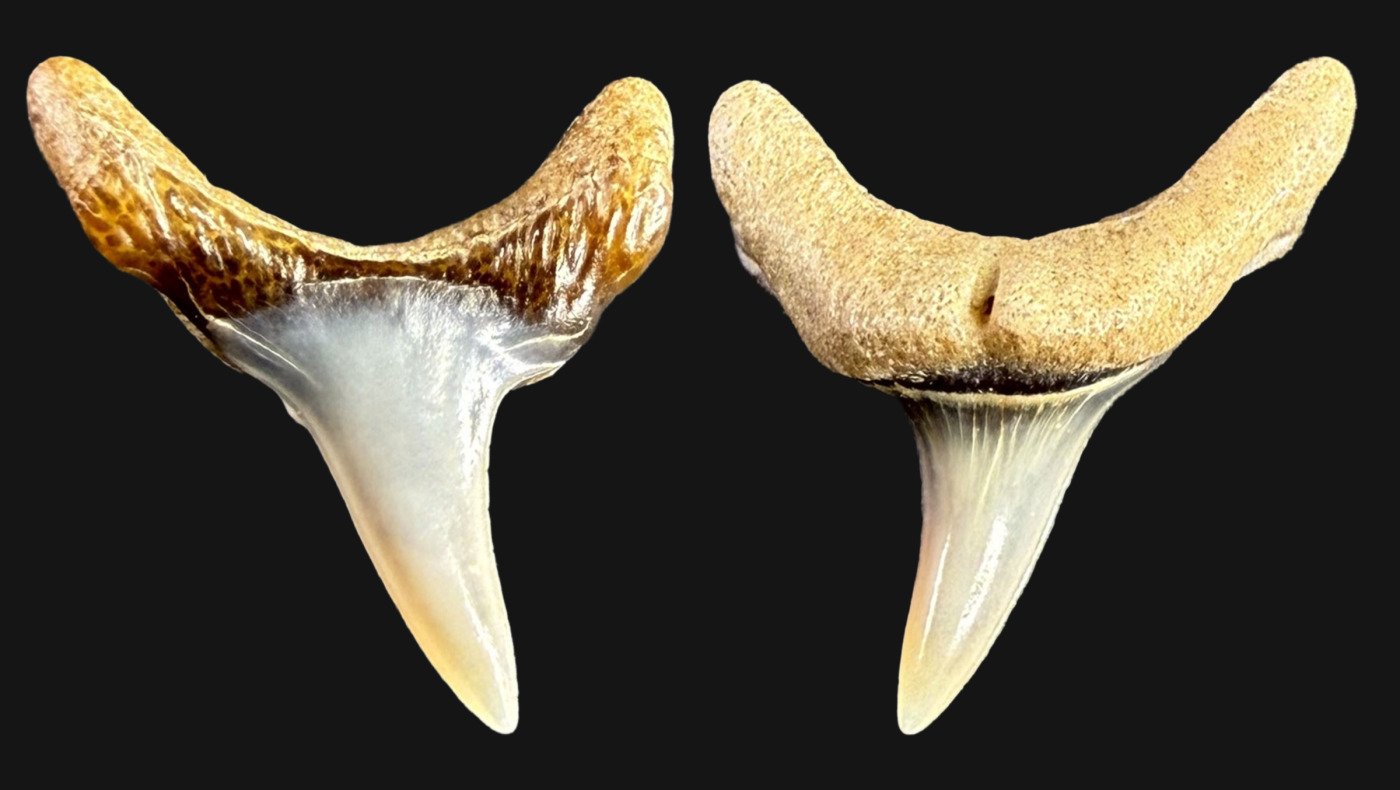
Identification Examples
Choose a fossil site to view photographed reference specimens.
Summary
Alopias crochardi was an early thresher shark and an important member of the early history of the alopiid lineage. Thresher sharks are specialised open-water predators, and the relationships of A. crochardi make an active pelagic lifestyle a reasonable interpretation for the fossil species.
Its teeth were suited to gripping and cutting relatively soft-bodied prey, with fishes and cephalopods among the most plausible food items. Living threshers famously use their greatly elongated upper tail lobe when hunting schooling prey, but that behaviour cannot be demonstrated for A. crochardi from teeth alone.
The species is known principally from its dentition, so much of its external appearance remains uncertain. Even so, it shows that recognisable thresher-shark relatives were already established in early Eocene marine ecosystems.
Quick Identification
Look for: a robust, laterally compressed thresher-shark tooth with a pointed cusp, no separate lateral cusplets and subtle basal crown folds or swellings near the crown-root junction on well-preserved examples.
Diagnostic Features
- Principal cusp is robust and laterally compressed rather than needle-like.
- Separate lateral cusplets are absent on typical teeth.
- Fine plications may occur close to the crown-root junction.
- Lower part of the posterior cutting edge can show characteristic basal swelling.
- Root is broad and bilobed, supporting a comparatively stout crown.
Fossil Details
Recorded Fossil Sites
London Clay Formation
References
- Rayner, D.; Mitchell, T.; Rayner, M. (2009). London Clay Fossils of Kent and Essex. 228 pp.. Medway Fossil and Mineral Society, Rochester, Kent View reference
- Ward, D.J. (1978). Additions to the fish fauna of the English Palaeogene. 1. Two new species of Alopias (Thresher Shark) from the English Eocene. Tertiary Research, 2(1), 23–28 View reference
- Ward, D.J. (1980). The distribution of sharks, rays and chimaeroids in the English Palaeogene. Tertiary Research, 3(1), 13–19 View reference