Campylostoma matutiforme
Campylostoma matutiforme
Representative Specimens
Selected reference specimens illustrating this species from different geological units and fossil sites.
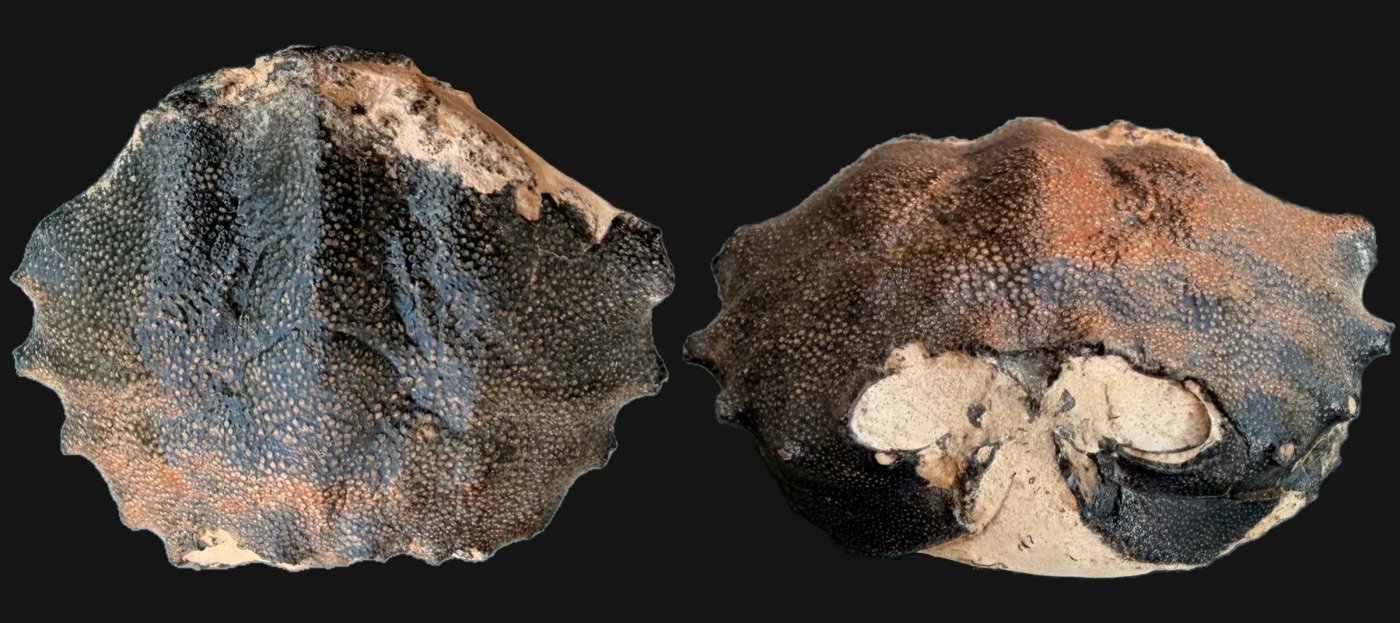
Identification Examples
Choose a fossil site to view photographed reference specimens.
Summary
Campylostoma matutiforme was a compact true crab living on the London Clay seabed. Its sturdy body suggests a bottom-dwelling animal that probably searched the sediment for small prey and edible remains, much as many modern marine crabs do.
It formed part of a surprisingly varied Eocene crab fauna in which different species occupied slightly different feeding and hiding niches. A crab like Campylostoma would have been both predator and prey: feeding on smaller animals while itself being vulnerable to fish, sharks and larger crustaceans.
Quick Identification
Look for: a compact, rounded and arched crab carapace with clearly divided dorsal regions and a distinctive cenomanocarcinid outline; retain worn central fragments at a broader crab identification.
Diagnostic Features
- Carapace compact, rounded and distinctly arched in profile.
- Dorsal regions are separated by clear grooves and swellings.
- Lateral margins form a short, compact outline rather than an elongate raninid form.
- Surface relief is stronger than in many flattened swimming crabs.
- Species-level identification uses the full carapace outline and regional pattern; the historical spelling mutatiforme is not a separate taxon.
Fossil Details
Similar Species
Recorded Fossil Sites
London Clay Formation
References
- J. S. H. Collins; C. J. T. Mellish; A. J. Ross; P. R. Crabb; S. K. Donovan. (2020). A guide to the fossil Decapoda (Crustacea: Axiidea, Anomura, Brachyura) of the British Isles. Proceedings of the Geologists' Association, 131(1), 19–50 View reference
- Thomas Bell. (1857). A monograph of the fossil malacostracous Crustacea of Great Britain. Part I. Crustacea of the London Clay. Monograph of the Palaeontographical Society, 10, i–viii, 1–44. Palaeontographical Society, London View reference