Coelopleurus wetherelli
Coelopleurus wetherelli
Representative Specimens
Selected reference specimens illustrating this species from different geological units and fossil sites.
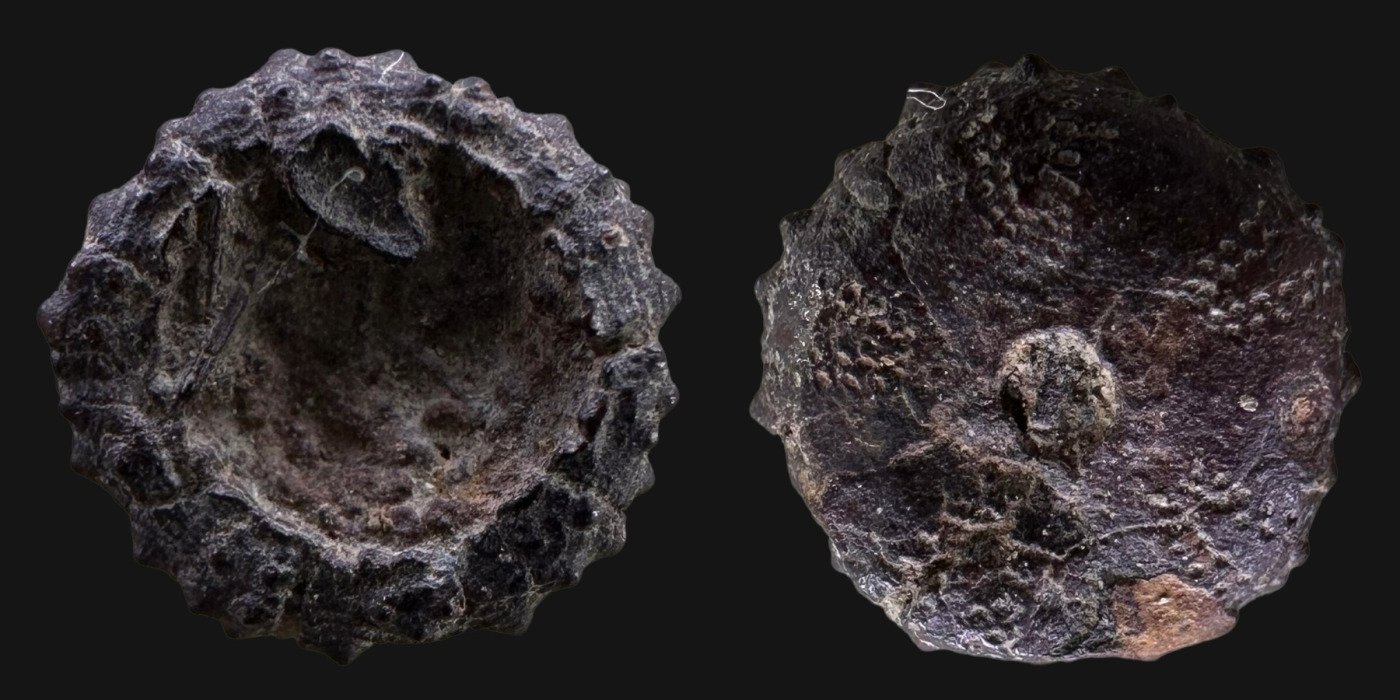
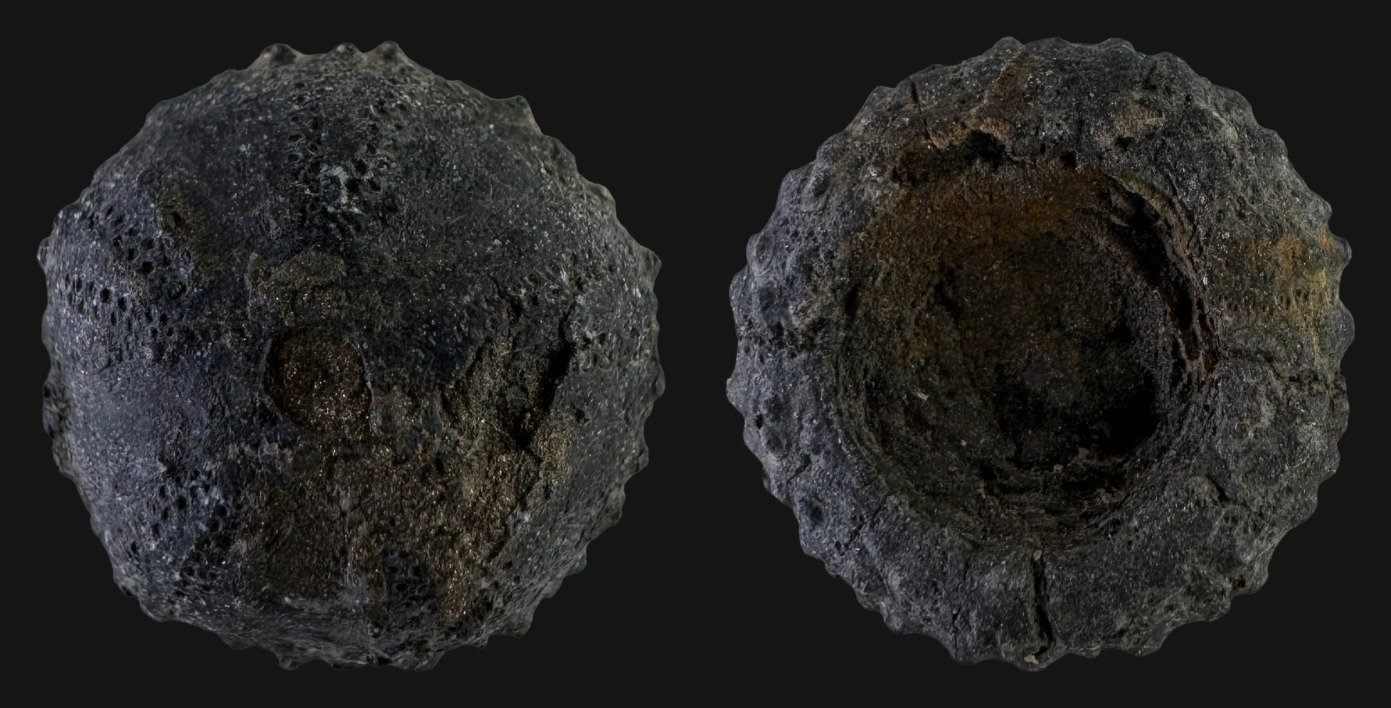
Identification Examples
Choose a fossil site to view photographed reference specimens.
Summary
Coelopleurus wetherelli was a regular sea urchin with a radially symmetrical test and movable spines. Regular echinoids live on the sea floor rather than burrowing deeply, and feeding by grazing, scraping and taking organic material from the substrate is a reasonable ecological model based on related arbacioids.
The rigid test was made from interlocking calcitic plates carrying prominent tubercles for the spines. London Clay fossils can occur as tests, test fragments, plates and spines; the test plating is much more useful taxonomically than isolated spines.
Quick Identification
Look for: a regular, rounded sea-urchin test with strong radial symmetry, prominent primary tubercles and distinct ambulacral versus interambulacral zones; a substantial piece of test is needed for confident species identification.
Diagnostic Features
- Test regular and radially symmetrical, not heart-shaped.
- Interambulacral plates carry large primary tubercles for strong spines.
- Ambulacral zones show paired pore series in narrow radial bands.
- Apical and peristomial regions are differentiated within an otherwise rounded test.
- Plate arrangement and tubercle pattern, rather than isolated spines, are required for species-level identification.
Fossil Details
Similar Species
Recorded Fossil Sites
London Clay Formation
References
- Forbes, E. (1852). Monograph of the Echinodermata of the British Tertiaries. Palaeontographical Society Monograph View reference