Hyopsodus wardi
Hyopsodus wardi
Representative Specimens
Selected reference specimens illustrating this species from different geological units and fossil sites.
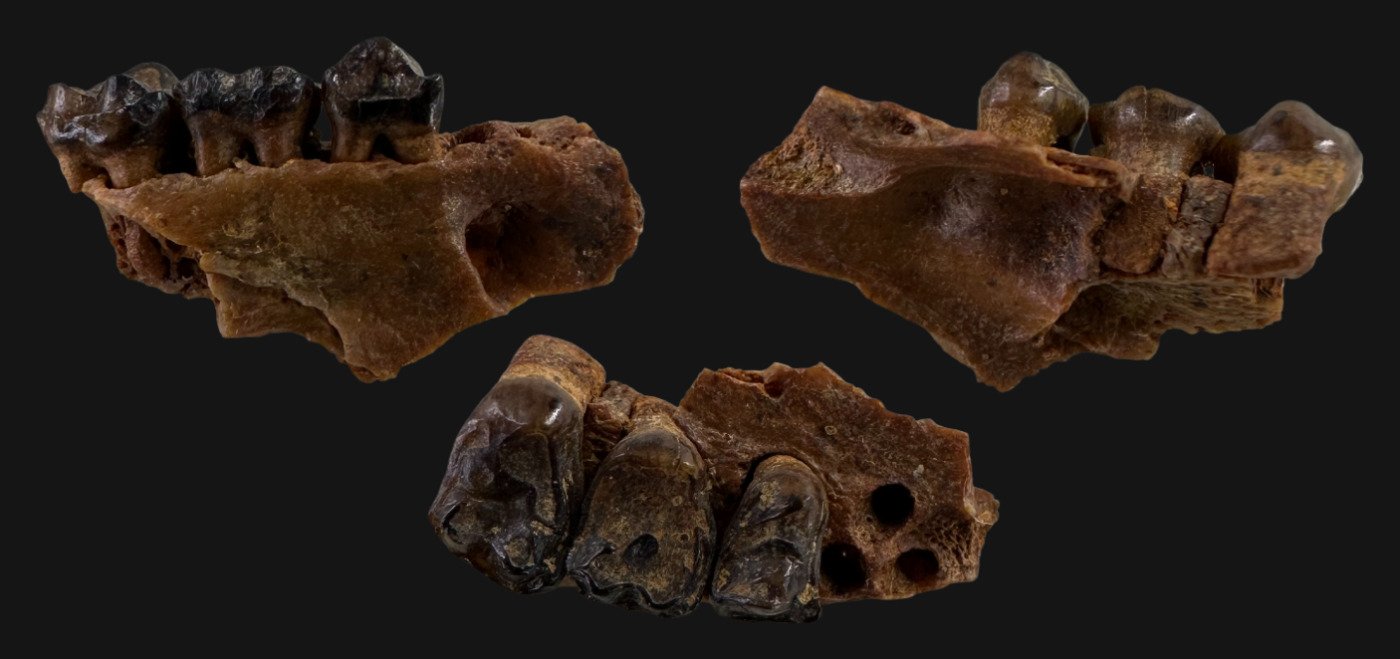
Identification Examples
Choose a fossil site to view photographed reference specimens.
Summary
Hyopsodus wardi was a very small terrestrial mammal living during the Early Eocene and is an important part of the Abbey Wood mammal fauna. It is known chiefly from tiny teeth and fragments of jaw rather than a complete skeleton.
Hyopsodus was historically placed among the broad collection of primitive mammals called “condylarths”, but that term does not represent a single natural modern lineage. There is therefore no simple living animal that can be described as its direct modern equivalent.
European H. wardi has been compared closely with similar North American mammals, contributing to evidence for rapid mammalian interchange between continents near the beginning of the Eocene. Fossils attributed to the species are also known from the Paris Basin.
Quick Identification
Look for: a tiny mammal cheek tooth only a few millimetres across, with several low rounded bumps joined by gentle raised ridges. On lower back teeth, look for a small extra bump and a raised rim running around part of the base.
Diagnostic Features
- Cheek teeth are very small and low-crowned, with rounded principal cusps.
- Lower first and second molars possess a prominent entostylid, a small additional cusp beside the entoconid.
- A distinct cingulid or raised basal ridge occurs along the ectoflexid region of the lower molars.
- Cusps and connecting ridges are comparatively weakly developed rather than forming strongly lophodont grinding surfaces.
- Last lower molar has a proportionally enlarged rear section compared with the preceding molars.
Fossil Details
Recorded Fossil Sites
Lessness Shell Bed
References
- Hooker, J. J. (2010). The mammal fauna of the Early Eocene Blackheath Formation of Abbey Wood, London. Monograph of the Palaeontographical Society, 164(634), 1–162. Palaeontographical Society, London View reference