Phyllodus toliapicus
Phyllodus toliapicus
Representative Specimens
Selected reference specimens illustrating this species from different geological units and fossil sites.
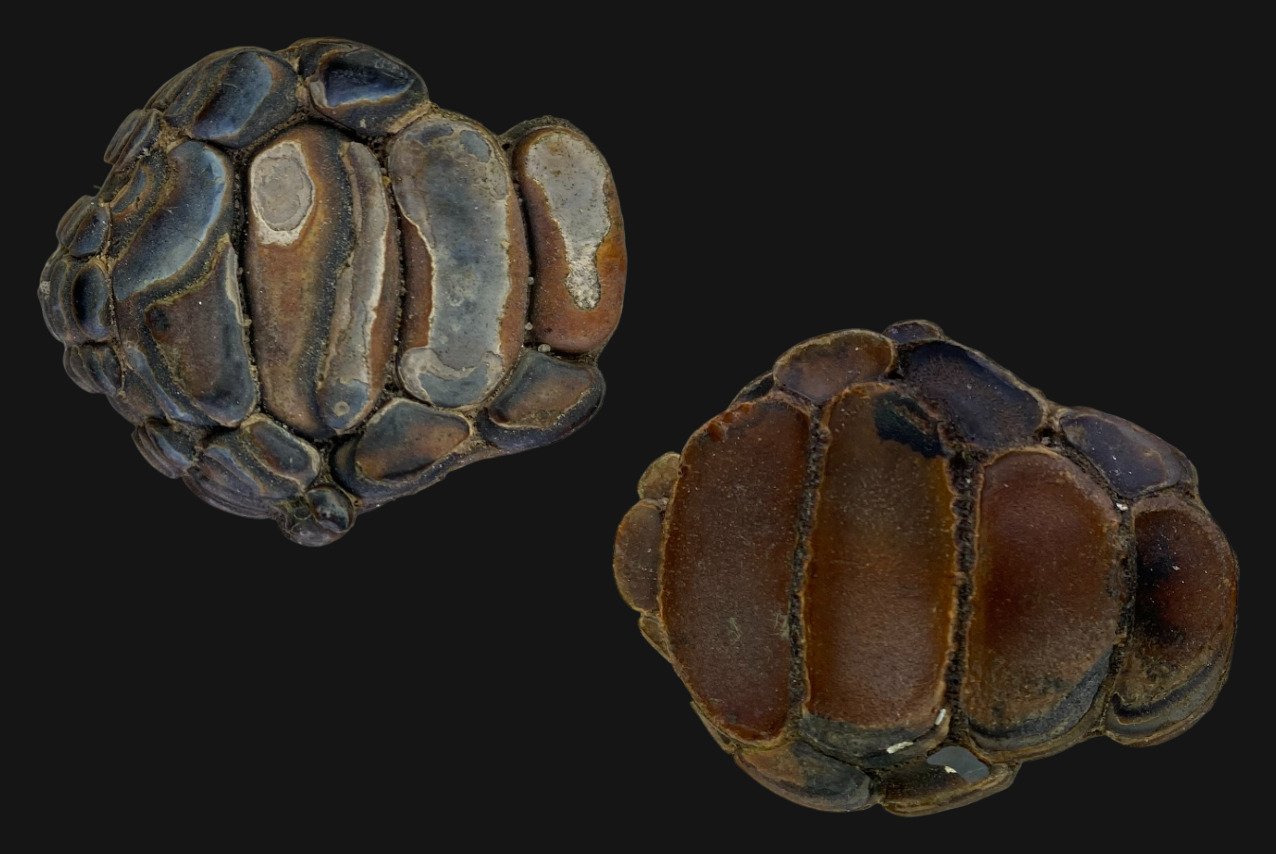
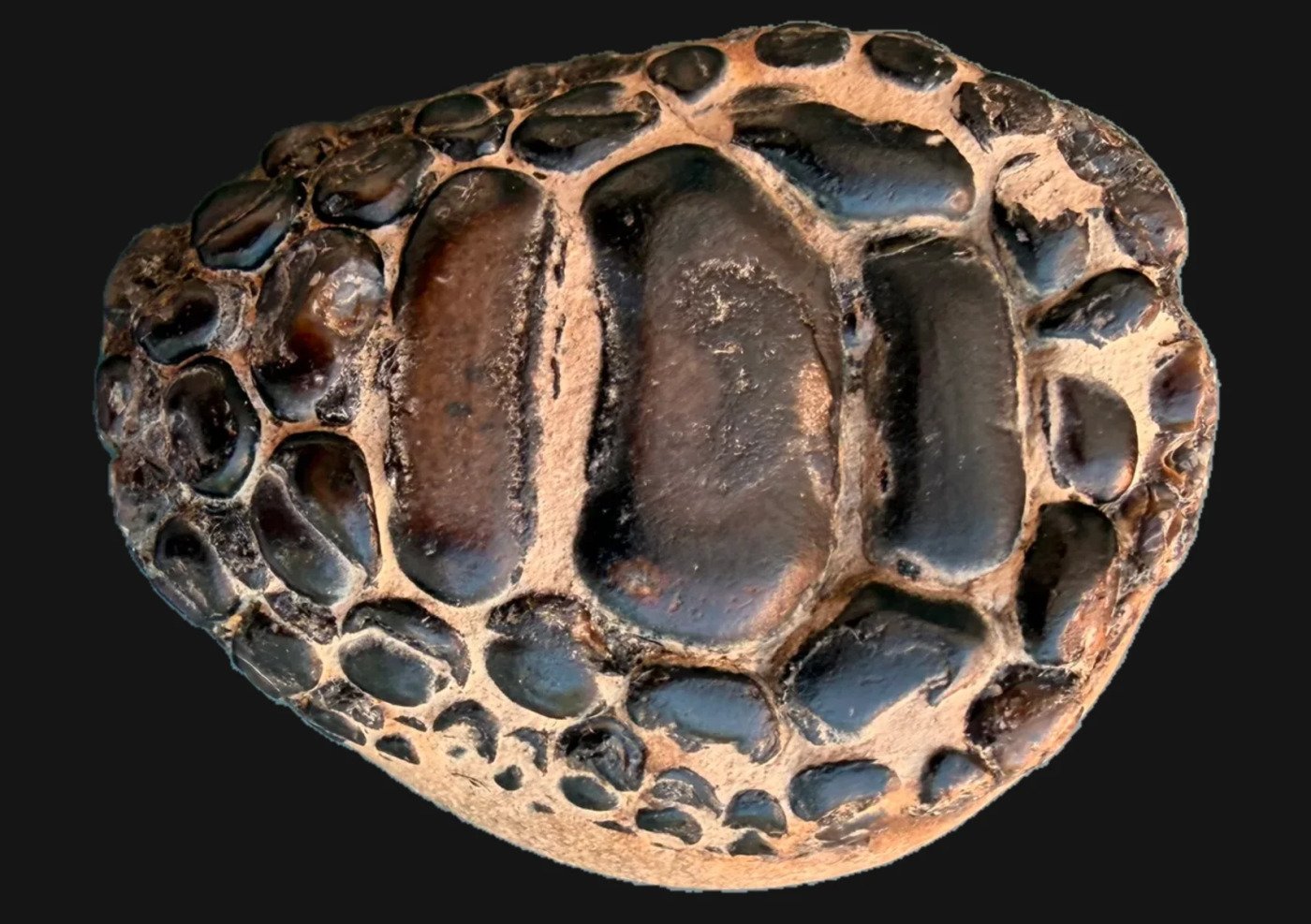
Identification Examples
Choose a fossil site to view photographed reference specimens.
Summary
Phyllodus toliapicus was a specialised phyllodont fish with large dental plates built for crushing. Its mouth carried repeated rows of rounded to elongate teeth packed into a durable pavement. This is strong anatomical evidence for durophagy — feeding on hard-shelled prey such as molluscs and crustaceans — although the precise prey species are not known.
The tooth plates are much more commonly preserved than the rest of the skeleton, so the feeding apparatus provides most of what is known about the animal. Phyllodus occupied a trophic niche very different from the long-jawed pursuit predators of the London Clay, processing resistant benthic food with repeated replacement teeth.
Quick Identification
Look for: a thick phyllodont tooth plate carrying several rows of rounded to oval crushing teeth, with the largest teeth concentrated toward the central functional surface and smaller teeth toward the margins.
Diagnostic Features
- Dentition forms a broad multi-rowed pavement rather than a single marginal tooth row.
- Functional teeth are rounded to oval with low, smooth crushing crowns.
- Central teeth are larger than those at the margins of the plate.
- Replacement teeth are stacked beneath or behind the functional series within the thick plate.
- Tooth crowns are closely packed, producing a continuous crushing surface with little exposed bone.
Fossil Details
Similar Species
Recorded Fossil Sites
Beltinge Fish Bed
Lessness Shell Bed
London Clay Formation
Walton Member
Wrabness Member
References
- Casier, E. (1966). Faune ichthyologique du London Clay. 496 pp.. Trustees of the British Museum (Natural History), London View reference
- Ebersole, J.A.; Cicimurri, D.J.; Stringer, G.L. (2019). Taxonomy and biostratigraphy of the elasmobranchs and bony fishes (Chondrichthyes and Osteichthyes) of the lower-to-middle Eocene (Ypresian to Bartonian) Claiborne Group in Alabama, USA, including an analysis of otoliths. European Journal of Taxonomy, 585, 1–274 View reference
- Friedman, M.; Beckett, H. T.; Close, R. A.; Johanson, Z. (2016). The English Chalk and London Clay: two remarkable British bony fish Lagerstätten. Geological Society, London, Special Publications, 430(1), 165–200. Geological Society of London, London View reference
- Ward, D.J. (1978). The Lower London Tertiary (Palaeocene) succession of Herne Bay, Kent. Report of the Institute of Geological Sciences. Institute of Geological Sciences View reference