Pliolophus barnesi
Pliolophus barnesi
Representative Specimens
Selected reference specimens illustrating this species from different geological units and fossil sites.
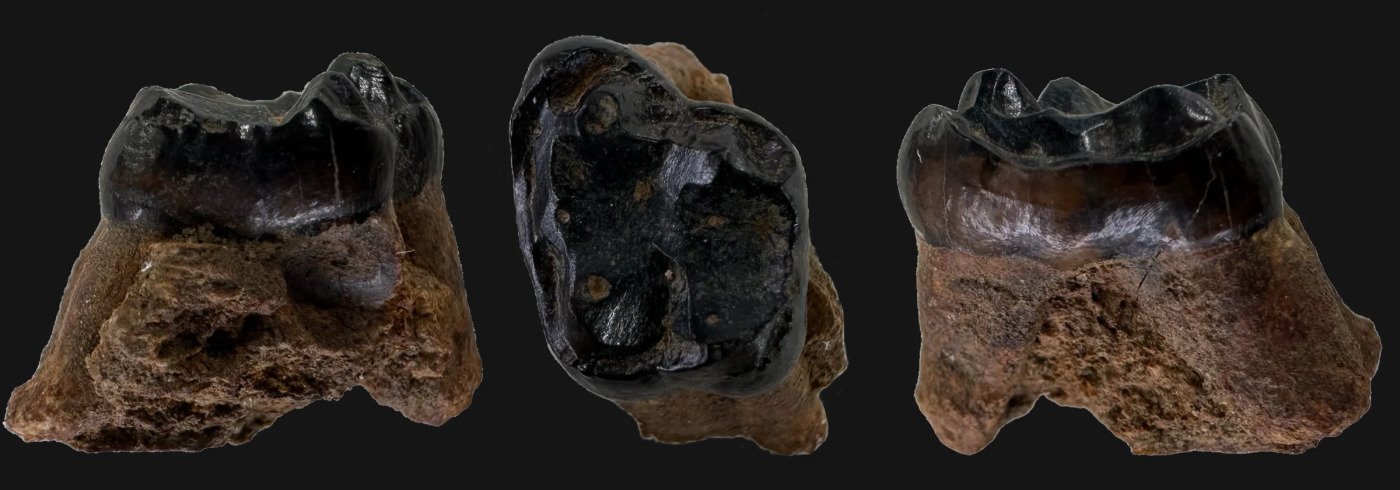
Identification Examples
Choose a fossil site to view photographed reference specimens.
Summary
Pliolophus barnesi was a small early perissodactyl belonging to the wider evolutionary radiation that ultimately produced horses, tapirs and rhinoceroses. Abbey Wood has yielded teeth and jaw material of this important Early Eocene mammal.
Historically Pliolophus was often discussed as an early horse relative. More recent phylogenetic work places it outside the true horse branch, making it particularly useful for understanding the very beginning of odd-toed ungulate evolution rather than simply treating it as an early horse.
Its remains form part of Abbey Wood’s important Early Eocene mammal fauna, while fossils assigned to the same species have also been reported from Early Eocene deposits in France.
Quick Identification
Look for: a small mammal cheek tooth with a low crown, rounded bumps and clearly raised ridges between them. Upper back teeth often have an extra small bump between the main ones, while the last lower molar has a noticeably enlarged rear section.
Diagnostic Features
- Upper molars carry a conspicuous additional cusp between the principal cusps.
- Main transverse ridge of the upper molars bends noticeably towards the outer side.
- Third upper premolar has a particularly enlarged additional cusp.
- On lower molars, the small rear cusp joins directly to one of the principal cusps.
- Last lower molar has a proportionally enlarged posterior section compared with the preceding molars.
Fossil Details
Recorded Fossil Sites
Lessness Shell Bed
References
- Hooker, J. J. (2010). The mammal fauna of the Early Eocene Blackheath Formation of Abbey Wood, London. Monograph of the Palaeontographical Society, 164(634), 1–162. Palaeontographical Society, London View reference