Serranopsis londinensis
Serranopsis londinensis
Representative Specimens
Selected reference specimens illustrating this species from different geological units and fossil sites.
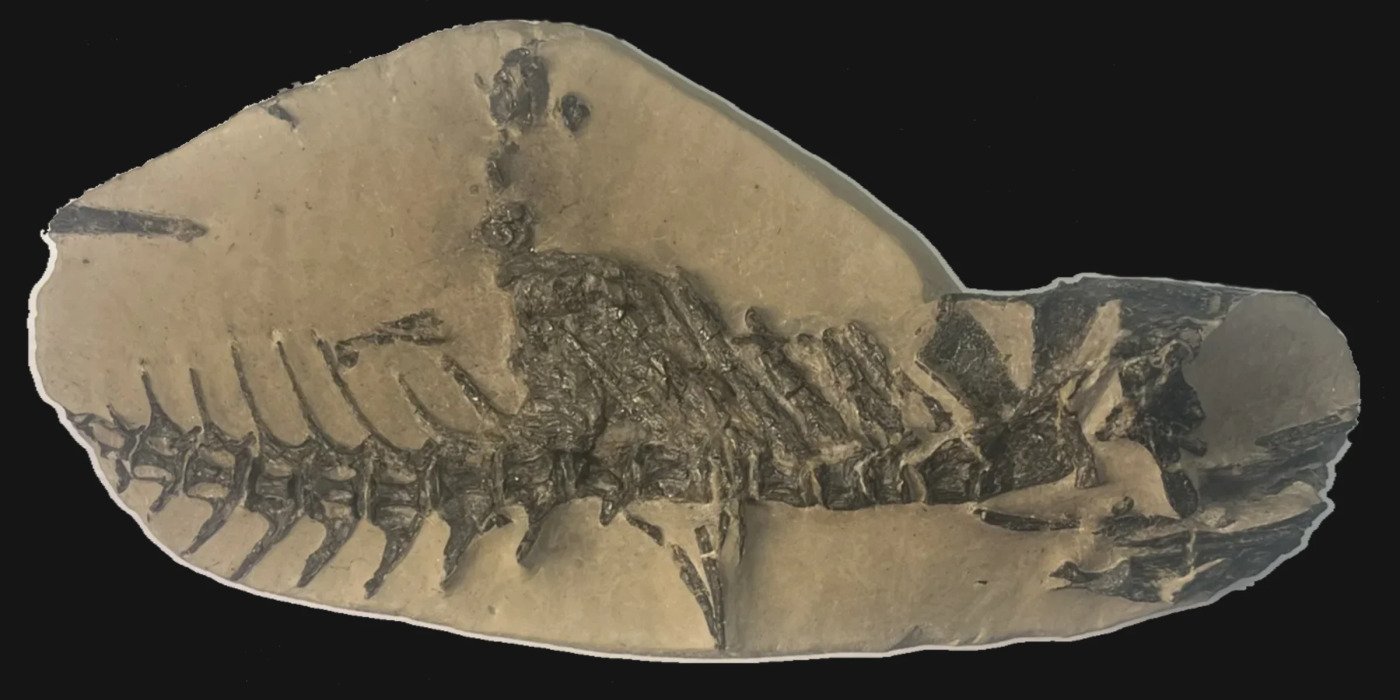
Identification Examples
Choose a fossil site to view photographed reference specimens.
Summary
Serranopsis londinensis is a percomorph fish from the London Clay whose exact family position remains uncertain. The skull is laterally compressed and bears a high, thick supraoccipital crest, indicating a deep-headed acanthomorph. Although it was historically compared with serranid-type fishes, current uncertainty means that a sea-bass-style ecology should not be assumed without qualification.
The preserved cranium suggests a substantial marine predator or generalist, but the available material does not securely establish diet. Its main significance lies in documenting a distinctive high-crested percomorph skull within the early Eocene radiation of acanthomorph fishes.
Quick Identification
Look for: a laterally compressed percomorph skull with a very large thick supraoccipital crest rising from the rear of the skull roof; unlike some high-headed London Clay fishes, the known material lacks a conspicuous ossified sclerotic ring.
Diagnostic Features
- Supraoccipital crest is large, thick and strongly elevated.
- Neurocranium is laterally compressed and high in profile.
- Posterior dorsal skull rises steeply into the crest.
- Sclerotic ring is not conspicuously ossified in the known material.
- Anterior skull narrows from the deep posterior cranium toward the snout.
Fossil Details
Recorded Fossil Sites
London Clay Formation
References
- Casier, E. (1966). Faune ichthyologique du London Clay. 496 pp.. Trustees of the British Museum (Natural History), London View reference
- Friedman, M.; Beckett, H. T.; Close, R. A.; Johanson, Z. (2016). The English Chalk and London Clay: two remarkable British bony fish Lagerstätten. Geological Society, London, Special Publications, 430(1), 165–200. Geological Society of London, London View reference