Squatina prima
Squatina prima
Representative Specimens
Selected reference specimens illustrating this species from different geological units and fossil sites.
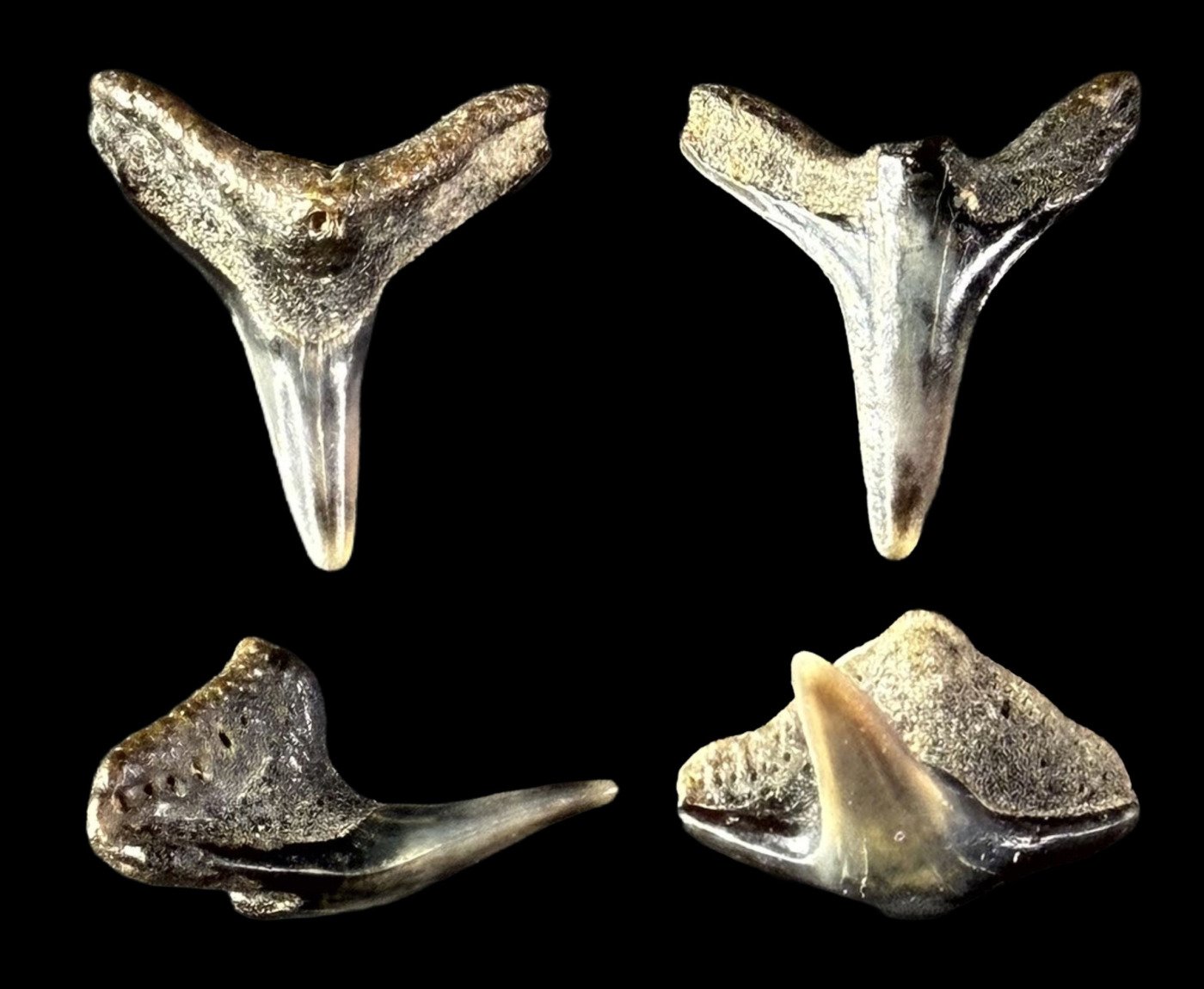
Identification Examples
Choose a fossil site to view photographed reference specimens.
Summary
Squatina prima was an extinct angel shark belonging to the same distinctive lineage as living angel sharks. Angel sharks have broad flattened bodies and spend much of their time resting on or partly buried in the seabed, a body plan very different from the streamlined open-water form usually associated with sharks.
A comparable ambush-predator lifestyle is likely for S. prima. Living angel sharks strike rapidly at fishes, crustaceans and cephalopods that pass within reach, and the fossil species probably exploited similar small to medium-sized prey, although its behaviour cannot be observed directly.
Its fossils are usually isolated teeth rather than complete bodies, but its placement within Squatina gives strong anatomical context for interpreting the animal. It represents a specialised benthic predator within the early Eocene marine ecosystem.
Quick Identification
Look for: a small, simple-looking tooth with one narrow central point and no separate smaller points beside it. The crown spreads into broad low shoulders, while the root underneath is wide and triangular to diamond-shaped.
Diagnostic Features
- Crown has a single slender central cusp, upright to slightly inclined.
- Distinct lateral cusplets are absent; the crown broadens into low shoulders instead.
- Cutting edges are smooth and unserrated, and the crown lacks strong ornament.
- Root is broad and low, with a triangular to diamond-shaped outline.
- A centrally positioned rounded labial flange projects from the front of the crown base.
Fossil Details
Recorded Fossil Sites
Beltinge Fish Bed
Lessness Shell Bed
London Clay Formation
References
- Dineley, D. & Metcalf, S. (1999). Fossil Fishes of Great Britain. Geological Conservation Review Series, 675 pp.. Joint Nature Conservation Committee, Peterborough View reference
- Rayner, D.; Mitchell, T.; Rayner, M. (2009). London Clay Fossils of Kent and Essex. 228 pp.. Medway Fossil and Mineral Society, Rochester, Kent View reference
- Ward, D.J. (1978). The Lower London Tertiary (Palaeocene) succession of Herne Bay, Kent. Report of the Institute of Geological Sciences. Institute of Geological Sciences View reference
- Ward, D.J. (1980). The distribution of sharks, rays and chimaeroids in the English Palaeogene. Tertiary Research, 3(1), 13–19 View reference