Xanthilites bowerbanki
Xanthilites bowerbanki
Representative Specimens
Selected reference specimens illustrating this species from different geological units and fossil sites.
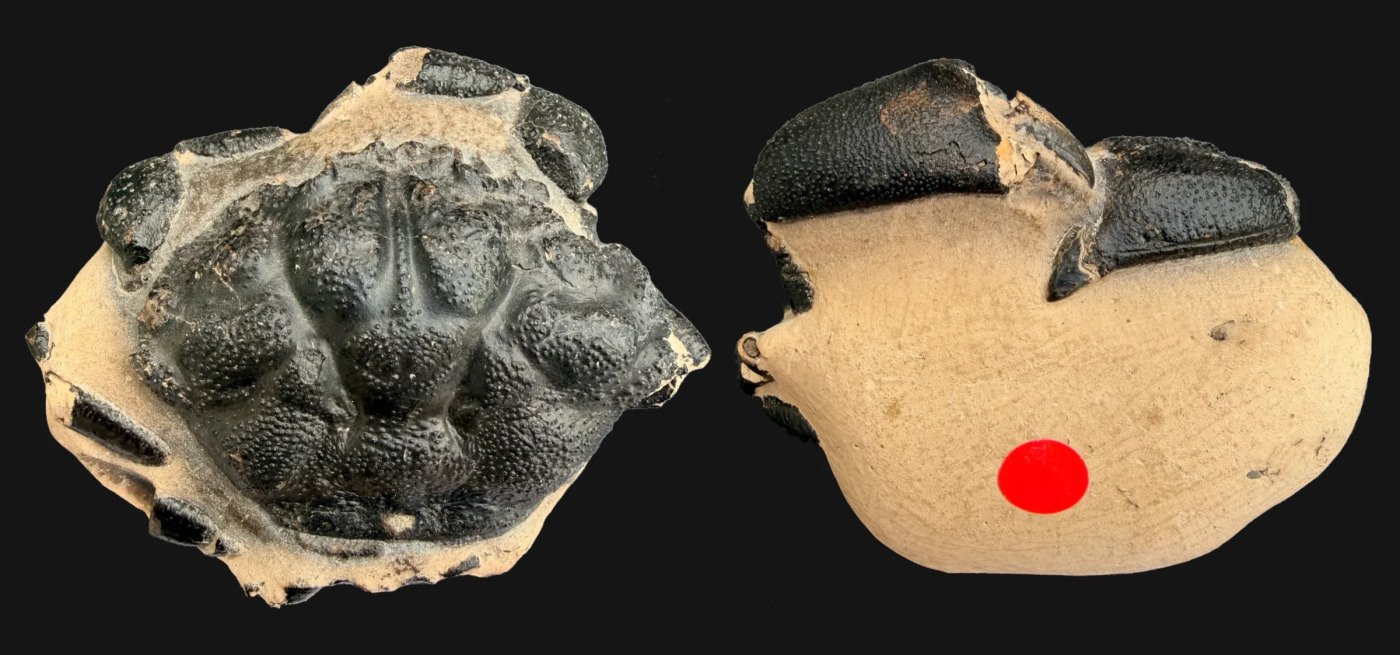
Identification Examples
Choose a fossil site to view photographed reference specimens.
Summary
Xanthilites bowerbanki was a robust true crab that lived on the seabed of the warm early Eocene sea represented by the London Clay. It belonged to the extinct family Tumidocarcinidae. Like many bottom-dwelling crabs, it was probably an opportunistic predator and scavenger, feeding on small invertebrates and edible remains while relying on a strongly built carapace for protection.
The species is particularly important because it is the type species of Xanthilites. Modern revisions have greatly restricted that genus around X. bowerbanki, making this crab a useful reference point for understanding the diversity and evolution of robust early Eocene true crabs.
Quick Identification
Look for: a broad, strongly vaulted crab carapace with deep regional grooves, a finely granular surface and a conspicuously spined front and outer margins.
Diagnostic Features
- Carapace wider than long, with length about 80% of maximum width.
- Carapace strongly vaulted lengthways, especially across the anterior third.
- Dorsal regions are swollen, finely granular and separated by deep grooves.
- Front is narrow and projecting, with four spinous projections including the inner-orbital spines.
- Each anterolateral margin bears four spines excluding the outer-orbital spine; the orbits are rimmed and lack fissures.
Fossil Details
Similar Species
Recorded Fossil Sites
London Clay Formation
References
- J. S. H. Collins; C. J. T. Mellish; A. J. Ross; P. R. Crabb; S. K. Donovan. (2020). A guide to the fossil Decapoda (Crustacea: Axiidea, Anomura, Brachyura) of the British Isles. Proceedings of the Geologists' Association, 131(1), 19–50 View reference
- Thomas Bell. (1857). A monograph of the fossil malacostracous Crustacea of Great Britain. Part I. Crustacea of the London Clay. Monograph of the Palaeontographical Society, 10, i–viii, 1–44. Palaeontographical Society, London View reference