Pachygaleus lefevrei
Pachygaleus lefevrei
Representative Specimens
Selected reference specimens illustrating this species from different geological units and fossil sites.
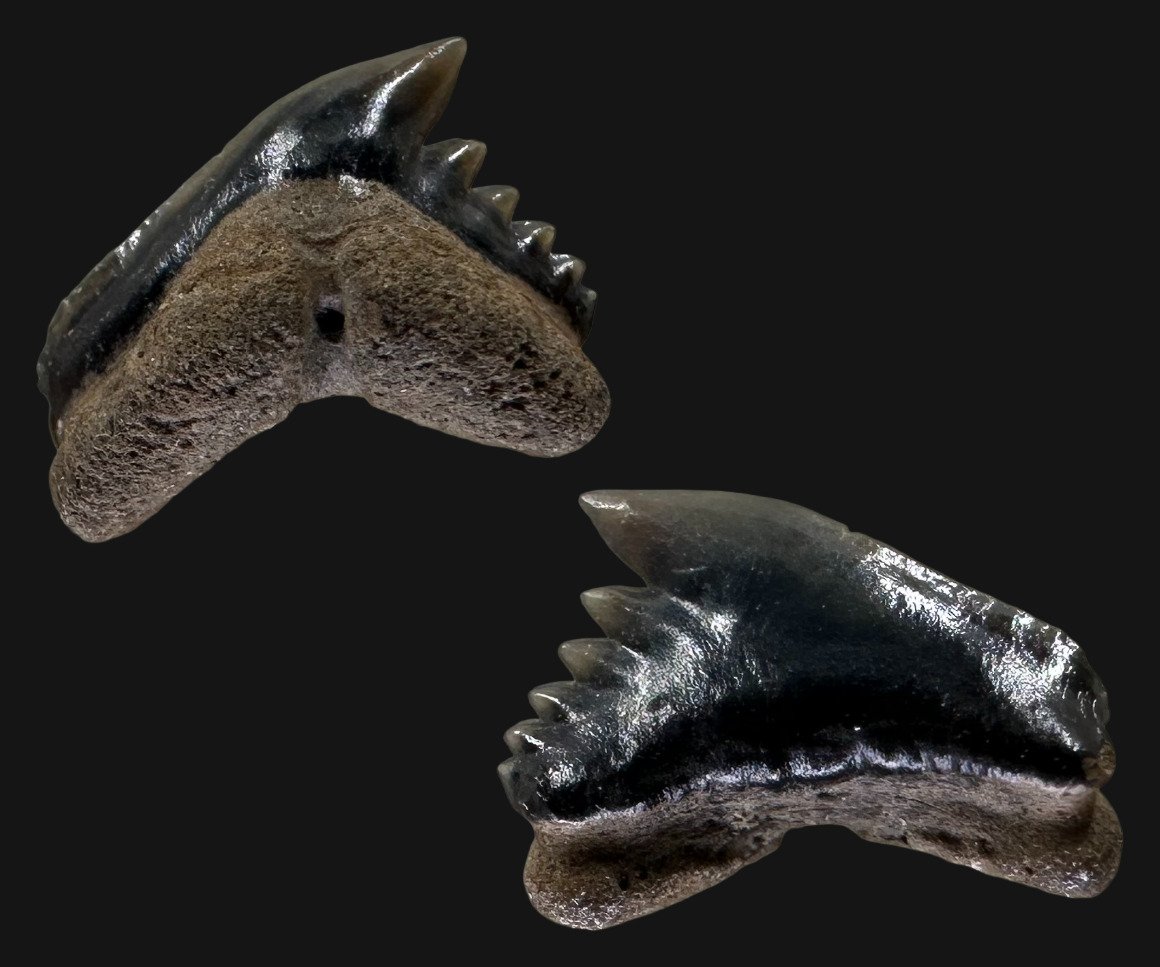
Identification Examples
Choose a fossil site to view photographed reference specimens.
Summary
Pachygaleus lefevrei was a small hound shark, part of the triakid radiation that included agile predators of coastal and shelf environments. It probably spent much of its time searching for manageable prey in the water column and near the seabed.
Its low asymmetric teeth formed a cutting dentition rather than a set of long piercing fangs. This suggests a varied diet of small fishes, crustaceans and other invertebrates, broadly consistent with the feeding ecology of living hound sharks.
The animal is known mainly from isolated teeth, so its exact body proportions cannot be reconstructed. The fossils nevertheless show that the early Eocene shark fauna contained several small carcharhiniform predators exploiting food resources below the scale of the large lamniform hunters.
Quick Identification
Look for: a small, low asymmetric hound-shark tooth with an oblique cusp, a long distal heel and a broad root; the crown profile is much lower than a catshark or sand-tiger tooth.
Diagnostic Features
- Main cusp is low, triangular and distinctly inclined distally.
- Distal heel is elongated and contributes a substantial cutting edge.
- Crown is strongly asymmetrical in lateral tooth positions.
- Root is broad and low with subdued paired lobes.
- Species separation relies on the shape of the heel and crown-root proportions.
Fossil Details
Similar Species
Recorded Fossil Sites
London Clay Formation
References
- Rayner, D.; Mitchell, T.; Rayner, M. (2009). London Clay Fossils of Kent and Essex. 228 pp.. Medway Fossil and Mineral Society, Rochester, Kent View reference
- Ward, D.J. (1980). The distribution of sharks, rays and chimaeroids in the English Palaeogene. Tertiary Research, 3(1), 13–19 View reference